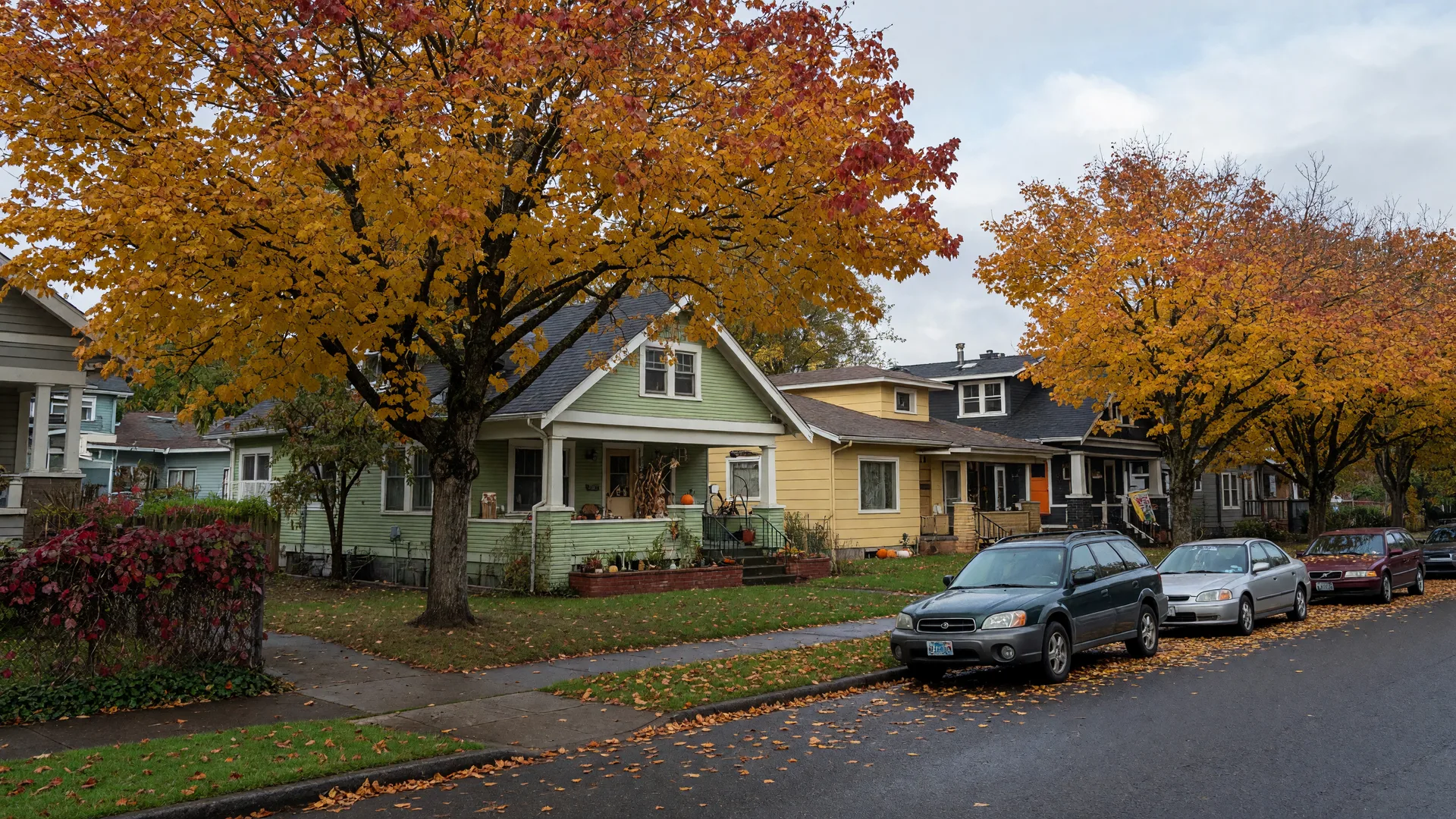
Something quiet and meaningful has shifted in the Portland metro housing market, and if you are a buyer who has felt priced out of the race, it is worth paying attention to. Mortgage rates held steady at 7.40 percent for a second straight week in mid-October, while regional inventory climbed to 4.2 months of supply, the most balanced picture this market has offered in years. Here is what the September 2026 numbers show, what they mean in your community, and how I am helping buyers and sellers think through the decision without the panic.
What the latest numbers actually show
Let us start with rates, because that is the number everyone checks. Freddie Mac's weekly survey put the average 30-year fixed-rate mortgage at 7.40 percent for the week ending October 15, 2026, unchanged from the week before. That is not a new high, and more importantly, it is not a new jump. The climb that started in mid-September, when the average sat near 6.95 percent, has paused for two consecutive weeks. The 15-year fixed averaged 6.71 percent in the same report, and a year ago the 30-year average was 6.27 percent, so we are meaningfully above where we were. But the direction is no longer straight up.
On the ground, the September regional report from RMLS tells a story of a market settling rather than collapsing. The Portland metro median sale price was $545,000, essentially flat year-over-year and up modestly from August. The average sale price came in near $630,500. Supply expanded to 4.2 months of inventory, up from 3.8 months in August, and the average home took 68 days to go under contract, with closed sales down about 8 percent from the prior month. Put simply: more homes, more time, more choices, and prices holding their ground. That is the definition of a balanced market, and it has been a long time coming.
What a balanced market means for buyers
For the last several years, the hardest part of buying in this region was not the financing. It was the competition. Homes went pending in days, offers went in over asking, and a prepared buyer could still lose out week after week. With 4.2 months of supply, that pressure has eased. You have time to see more homes, think through your decision, and negotiate terms instead of simply reacting.
That negotiation room is real. Asking a seller to contribute toward closing costs or a temporary rate buydown is a normal conversation again, not an insult. In a market where the average home sells near asking price, the financing structure often matters more than the sticker price. A seller-paid buydown can lower your monthly payment for the first few years. Closing-cost credit can protect your down payment savings. These are the levers that turn a flat headline rate into a payment that actually fits your life, and they are far more available to buyers now than a year ago.
I want to be honest about the other side of the coin. The median holding at $545,000 does not mean every neighborhood feels flat, and a 7.40 percent rate still costs real money. On a loan near $700,000, the difference between that rate and the 6.27 percent average of a year ago is roughly $560 a month in principal and interest before taxes and insurance. That is substantial, and I will not pretend otherwise. But the decision was never going to be settled by one quarter point. It is decided by whether the right home, the right payment, and the right plan fit your life for the years ahead.
What it means for sellers
If you are selling, the same numbers read differently, and I think honest sellers deserve the straight version. The days of multiple offers and waived inspections in every neighborhood are over. An average of 68 days on market means your home may not sell the first weekend, so pricing it realistically from day one matters more than it has in years. The good news is that median prices have held, so the value you built is not disappearing. A balanced market rewards homes that are priced well, presented well, and positioned to stand out.
What it looks like in your community
The metro-wide numbers flatten a lot of local texture, and the communities I serve are a good example. In Lake Oswego, the story is resilience: the rolling median sale price sat near $1.014 million over the three months ending in September, up about 8.8 percent from a year earlier. That is a market that has largely shrugged off the rate climb, and it sits well above the conforming loan limit, which means most purchases there are jumbo loans with their own pricing logic.
Elsewhere the picture varies. West Linn has been steadier, with medians near $800,000 and little year-over-year change. Tualatin has seen prices up in the high single digits on a smaller base. Wilsonville's six-month median sits around $627,000. Oregon City has been roughly flat to slightly down, and Canby shows wide swings month to month because it simply has fewer sales to average. The takeaway is that the region is not one market. It is a collection of pockets, each with its own balance and financing profile. That is exactly why a conversation with someone who works across all of them beats anchoring on a single headline number.
How to think about the decision
- Decide from your payment, not the ticker. Run the real number with taxes, insurance, and your down payment included. If the payment works for your life at 7.40 percent, the decision is about the home, not the rate. If it does not work, waiting for a quarter point rarely fixes that.
- Use the leverage a balanced market gives you. Seller credits, temporary buydowns, closing-cost concessions: these are realistic asks again, and they can move your payment more than the daily rate headline.
- Shop the program, not just the rate. FHA and VA averages have run below the conventional headline in recent weeks. Depending on your profile, the right program can be its own rate strategy.
- Get your file ready before you tour. In a market with more choices, the buyers who move best are still the ones already pre-approved. When the right home appears, there is no time to scramble.
- If your situation has moving parts, bring in experience. New construction, a jumbo purchase in Lake Oswego, a trust, a remote or split-location closing, VA or FHA financing: these are exactly the scenarios where decades of pattern recognition keep a transaction calm and on track.
A balanced market is not a reason to panic or a reason to wait forever. It is a reason to breathe, run your real numbers, and move when the right home and the right plan line up.
If the last few weeks of headlines have you asking whether this is the time, I would love to sit down and go through it with you. Bring me your numbers and your questions, and I will give you straight answers about programs, buydowns, jumbo pricing, and what actually makes sense for your situation. No pressure, no pitch, no pretending I can predict the next rate move. Just clarity from someone who has guided clients through every market cycle since 1994.
God Bless,
Travis Olson
Area Manager - Senior Loan Officer / Construction Development Specialist
NMLS #111072 | OR/WA

Travis Olson
Area Manager – Senior Loan Officer / Construction Development Specialist
NMLS · 111072 · OR/WA · Eureka Mortgage Planning